
Helping or supporting?

I have often heard people say, I was only trying to help – after things have gone pear shaped and they’re the ones getting the blame. One of my parents’ favourite expressions was that someone was more of a hindrance than a help. The common denominator here is the word help. I’m always suspicious of people who offer to `help’ because I think their motives often come from a desire to take over or control the situation: to do things their way: to fix it! That’s not to say that they don’t mean well. Very often these deeper motives are unconscious and come from a place of wanting to feel better about themselves. But that’s not a lot of use if the people or person they’re helping ends up feeling frustrated.

I much prefer to use the word support. Supporting someone means listening to what they want, rather than charging in with what you want to do. In an earlier blog I mentioned the incident when my brother, who was blind, had been waiting for a friend at the side of the road. Suddenly a well-meaning passer-by grabbed his arm and led him across the road, then walked off leaving my brother to make his own way back through the busy traffic to where he’d been waiting originally. The man probably thought he was helping but, in fact, he was hindering my brother and actually endangering his life. I have no doubt that the man truly believed he’d done his good deed for the day whereas the reality was, he’d made my brother’s day much more difficult.

And that, for me, is the difference between helping and supporting. Supporting is empowering: helping is often taking over and therefore dis-empowering. It’s like the old saying: give a man a fish and you feed him for a day: teach him how to make fishing nets and you feed him for life. (Also read woman for man – I don’t want any gender stereotypes here.) Giving the fish is helping but it’s making the person dependent: teaching how to make nets is supporting them to become independent.

So, what other differences are there between helping and supporting?

  • Supporting is about being open to whatever the other person wants: helping is often about trying to impose your ideas on them.
  • Support is about allowing them to make their own decisions and letting them make mistakes without saying I told you so or using the dreaded word should/n’t!
  • Support is about offering your opinion: helping often looks like giving advice and then being offended if they don’t take it.
  • Support is encouraging them to be the best that they can be, independent of you or anyone else: helping often ends up with the person becoming dependent on the `help’ being given.
  • Support is listening actively, that means really hearing them without judgements: helping is usually about talking to someone and telling them what you think they should do.
  • Support is asking how the person wants to be supported: helping is often comes from a space of really wanting to help so it’s coming from that person’s own desire to do good rather than hearing what the other person actually needs or wants.
  • Support is altruistic: helping is egotistic.

Many years ago a dear friend of mine had a very difficult birth with her second child. I phoned her and asked if she wanted anything but she told me that her mum was with her and she just wanted some time to recover. But I didn’t hear that. I really wanted to help my friend. So, going against what she’d told me, I got in my car, drove almost an hour to her house and turned up unannounced offering to do some shopping for her. My ego thought I knew better than she did about what she wanted. And I was then hurt and shocked that she wasn’t grateful for the fact that I’d ignored her and had arrived on her doorstep when she was in pain, depressed and just wanted time with her mother and new baby.

Needless to say we lost touch for many years but, thanks to social media, we are in contact again and, if you’re reading this (you’ll know who you are) I apologise from the bottom of my heart for not hearing you. It was my totally selfish desire to help and I was wrong. No excuses. It’s that simple.

So next time you find yourself offering to help someone, just take a minute and then ask, `Do you want some support?’

And, even more importantly, don’t be offended if they say, `No!’
When is enough, enough?

How many times have you heard people say, `I’m not greedy: I just want enough to be comfortable.’ But how much is enough? What does comfortable mean? On Chanel 4 this week there was a Dispatches documentary about children living in poverty. One of the families featured was a single mum with two children aged 8 & 5. They had fled domestic abuse and were living on £5 a day for food, heating, electricity and everything else. That’s just £1.66 per person per day. I don’t know how much enough is, but I know that £1.66 per day is NOT enough and I feel ashamed to live in a society where families are expected to exist on that.

We are in December now – not so much the season of goodwill; more the season of commercialism.We are bombarded with adverts telling us that we don’t have enough – we need the latest £1,000 phone, or diamond encrusted watch that tells you not only the time but also how far you’ve walked, your blood pressure, heart rate and probably boils the kettle for you too! Children, whose toy cupboards already look like Hamley’s shop floor, are told they need more plastic gadgets that will probably be discarded within a few months.

Images of families sitting around tables groaning under the weight of luxury food, subliminally tell us that the turkey/nut roast and mince pies we were planning is nowhere near enough to sustain us over the 2-day Bank Holiday. A significant amount of the food we buy over the holiday period will end up in landfill, to rot down and produce methane and other greenhouse gases that will further enhance climate change. Surely enough is enough?

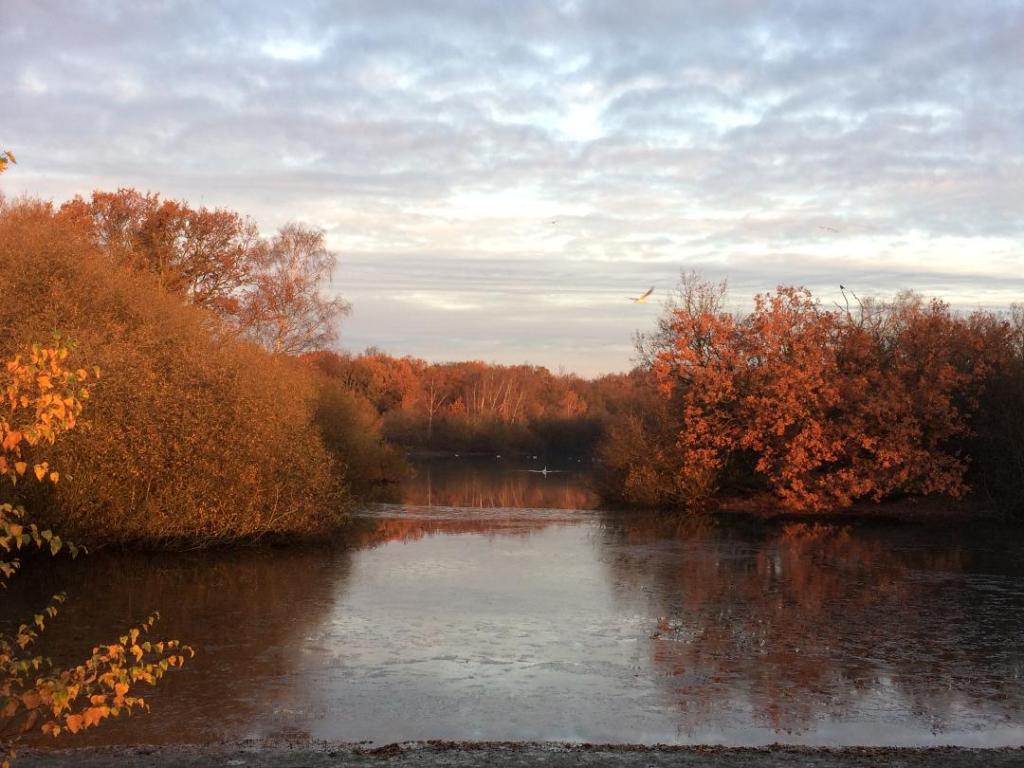
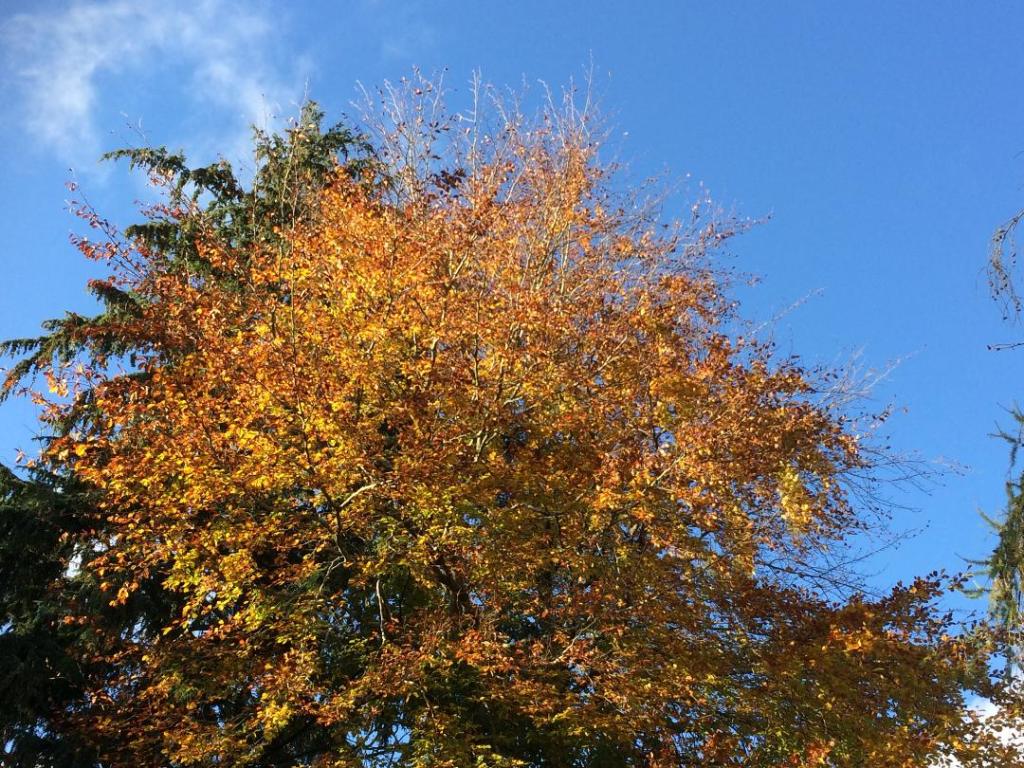
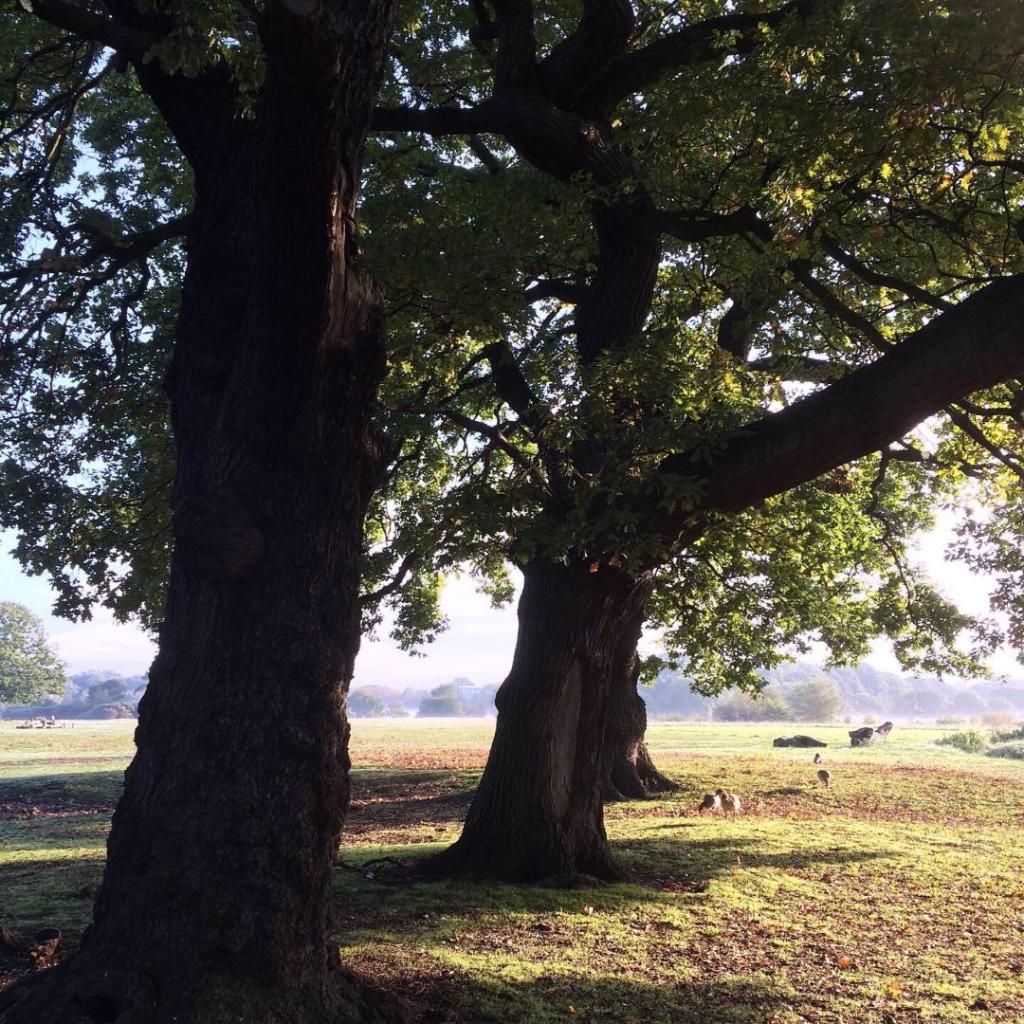
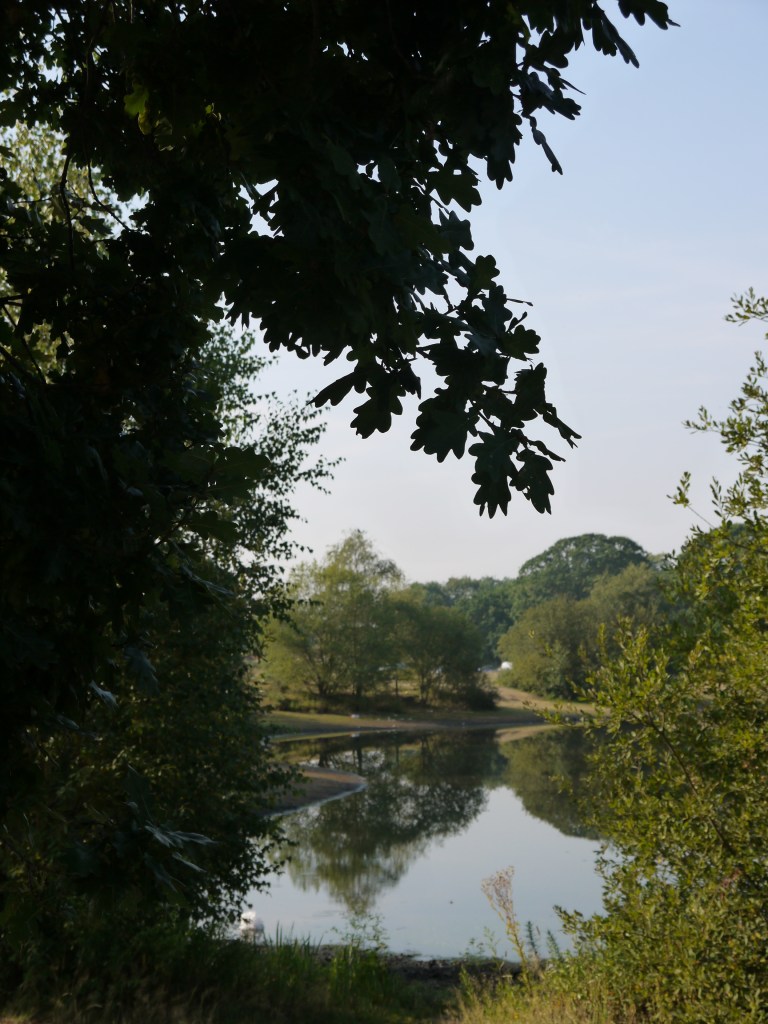
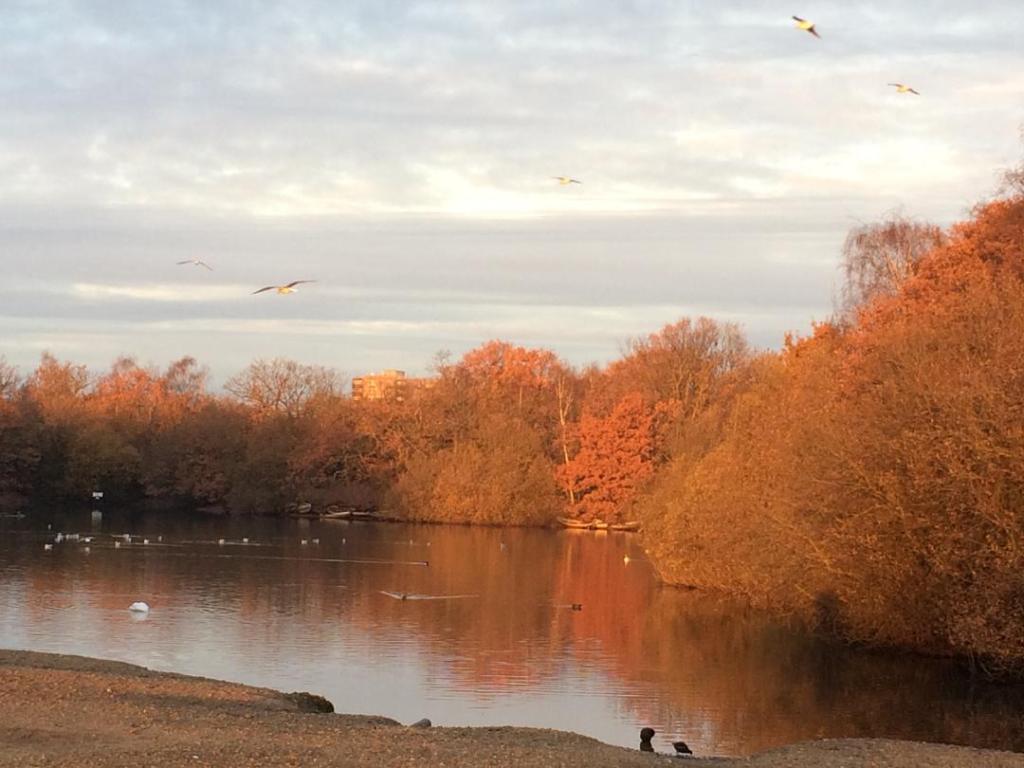
All the pictures on this post were taken this December. Note the leaves still on the trees. A couple of decades ago, the trees would have been bare by December but not any more. The seasons are changing and that is a direct result of climate change. And we are all responsible. It’s easy to blame the U.S. or China or the big industrial companies but if every single one of us made one small change, we really could change the world.

Here are some of the things my family and I are doing this year: we have drastically cut down the number of presents the adults will get and also reduced the number the children will receive. Personally, I have hand-made all my grandchildren’s presents this year, so that their gifts will have love sewn into them and will, hopefully, become heirlooms. We have agreed to use non-sparkly, non-mettalic wrapping paper with no sticky tape: the presents will be tied with string or rafia so that everything can be recycled. I also managed to find biodegradable crackers filled with sustainable trinkets and most of the food will be homemade with as little plastic wrapping as possible.

Christmas toy delivery to Whipps Cross Hospital 2018

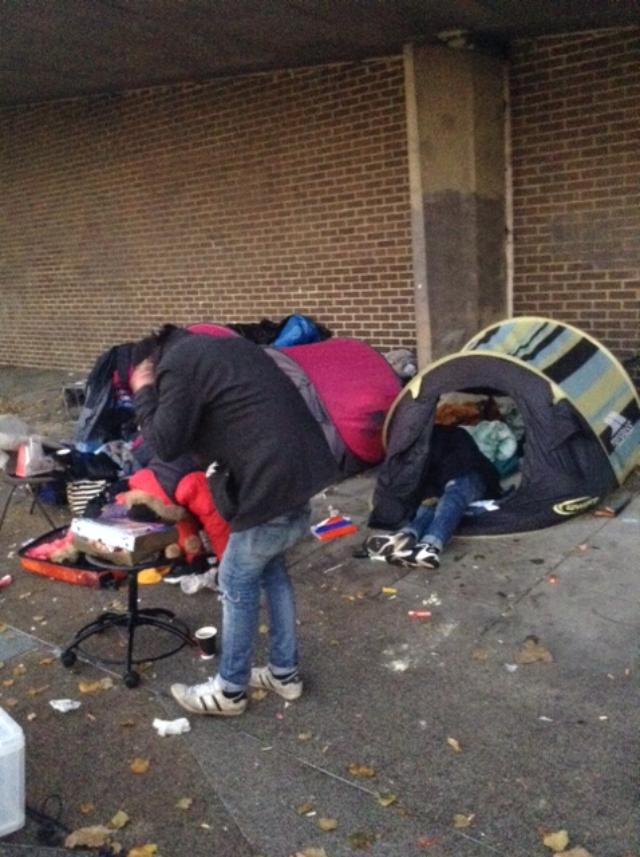
My husband and I also buy presents for children who are in hospital over the Christmas period and families on low incomes through his charity the Frank Charles Give a Gift Appeal: http://www.frankcharles.org My husband also feeds between 30 – 45 homeless people every week and each Christmas we take them for a cooked breakfast and give them a present of socks, hats, gloves, underwear and toiletries. This is through the organisation he runs called Feed The Streetz. It won’t solve the problems of the world – or those of the rough sleepers – but it might help to bring a little bit of comfort and kindness to people who have nothing.

These images were taken yesterday – within a few hundred metres of one of the largest shopping malls in Europe!

I love Christmas as much as the next person but it is becoming a season of excess. And the vast majority of us have everything we need. We have enough. More than enough. This year, as well as buying presents for the family, what about buying an extra one and giving it to the Salvation Army or another charity that supports people and families living in poverty. As well as buying your own food for Christmas dinner, buy some extra – maybe luxury items – for those less fortunate and give them to your local food bank.

Together, we can bring about change.

And if you’re interested in following my husband on FaceBook you can check him out on www.frankcharles.org or Feed The Streetz. Happy giving!

Turnips, mischief and bonfires.

Ah, the good old days! When I was growing up in an East Yorkshire village in the 1960s, we didn’t celebrate Hallowe’en. Nor did we have pumpkin lanterns. Our lanterns were made out of either turnips or swedes – both considerably harder to carve than pumpkins – and, instead of October 31st we had Mischief Night – the night before Bonfire Night: November 4th, .

And it really was about mischief! The people who complain about trick or treating nowadays, have no idea of the terror that Mischief Night could inflict on the elderly and those living alone. Children didn’t politely knock on doors wearing fancy dress and asking for sweets. It was rather more sinister with (mainly teenagers) playing knock-down-ginger: a game where children ring the door bell then run away before the householder can answer. In our area, it became even more upsetting for the victim as the mischief makers often tied the front and back door of a house together with string or tied a dustbin lid to the front door before running off. My brother and I were never allowed to participate as it was deemed an excuse for mindless vandalism by our parents. And, as I grow older, I think: rightly so! There’s a lawless element about Mischief Night.

Hallowe’en, however, has much more spiritual roots. Despite all the claims that it’s a night for devil-worshippers to do Satan’s work, Hallowe’en has it’s origins in Samhain, the pagan festival on the last day of October to celebrate the end of the third and final harvest: that of nuts and berries.

Later on, when Pope Gregory III decided to change the date of All Saints’ Day (also known as All Hallows’ Day) from May 13th to November 1st to coincide with the dedication day of All Saints’ Chapel in Rome, the evening before became known as All Hallows’ Eve – Hallowe’en. In Ireland, a Hallowe’en tradition developed for people to light bonfires and wear scary clothes to frighten away `evil spirits’. And, after the potato famine and the clearances by English landowners, many Irish families emigrated to America taking this tradition with them.

Trick or treating, the practise of knocking on doors and asking for sweets, also has its roots in religion and is not, as is popularly believed, an American custom adopted by the Brits. Throughout Europe, poor children would knock on doors on All Hallows’ Eve asking for food and money in exchange for saying prayers for the souls of the dead. This became particularly prevalent during the plagues that swept across Europe between the C14th – C17th.

So the Hallowe’en that we know today is a combination of Samhain and All Saint’s Eve. It’s about the ancient and the new; about giving and honouring. At Samhain and Harvest Festivals we give thanks for the food that’s been gathered in to keep us going through the dark days and nights of winter: likewise at both Samhain and All Saints’ we honour the souls and memories of our departed family and friends. And both festivals include donating to the poor, be that children asking for sweets or those on low incomes in need of food.

Most autumn festivals also include bonfires to bring light and warmth into the dark nights. But, while I love a good fire, I can never subscribe to the practise of burning an effigy, be it Guy Fawkes or anyone else. To me, it’s just not good karma.

So whatever you celebrate at this time of year, be safe. Remember the origins of the festivals are not in playing tricks but in gifts and gratitude. Have a splendid Samhain, an awesome All Hallows’ Eve, a delightful Diwali and a brilliant bonfire night!

Horses for courses

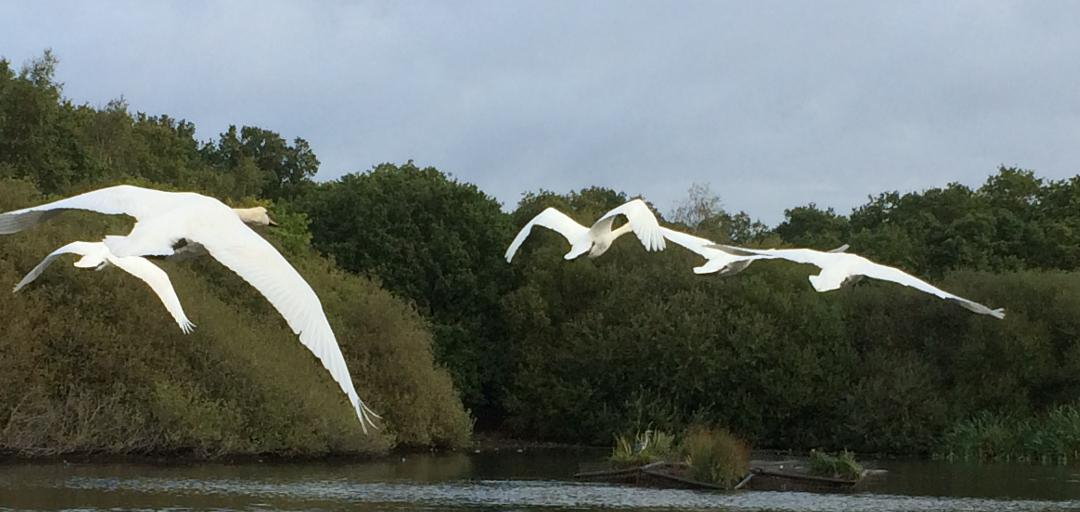
Swans on the wing.

I was recently introduced to another Reiki Master. She and I both thought we recognised each other but, despite interrogation worthy of the Spanish Inquisition, there didn’t seem to be any common denominator. Perhaps it was just one of those `meeting of minds’ things: recognising each other on a soul level. At one point, over coffee, she asked me which I thought was more effective: Reiki or ThetaHealing.

The simple answer is: it depends on the client and their condition. If someone comes to me with a sports injury or an acute problem such as aggravated arthritis or cancer even, I wouldn’t hesitate to give them Reiki. But if someone comes with a chronic condition such as persistent back pain, difficulty in conceiving, depression, addiction or any other long term health issue, I would probably be more likely to suggest ThetaHealing to try and root out the underlying reason for their condition. Whether or not we like it, our minds and bodies are inextricably linked and our beliefs, thoughts and fears are often reflected in our physical well being. One of the greatest exponents of this theory was the late Louise Hay and I can highly recommend her books if you’re interested in learning more about this.

You Can Heal Your Life by Louise L. Hay - (9781870845014)

One thing I do know is, if I’m asked to work with an animal, Reiki is the way to go. I really enjoy working with animals because they don’t come with any preconceived ideas or expectations. Human clients often come with a belief system already in place. Either: this is a load of mumbo-jumbo or this is the cure-all for every ailment under the sun. All animals have to do is lay, sit or stand there while I channel the Reiki energy. And the results are often astounding.

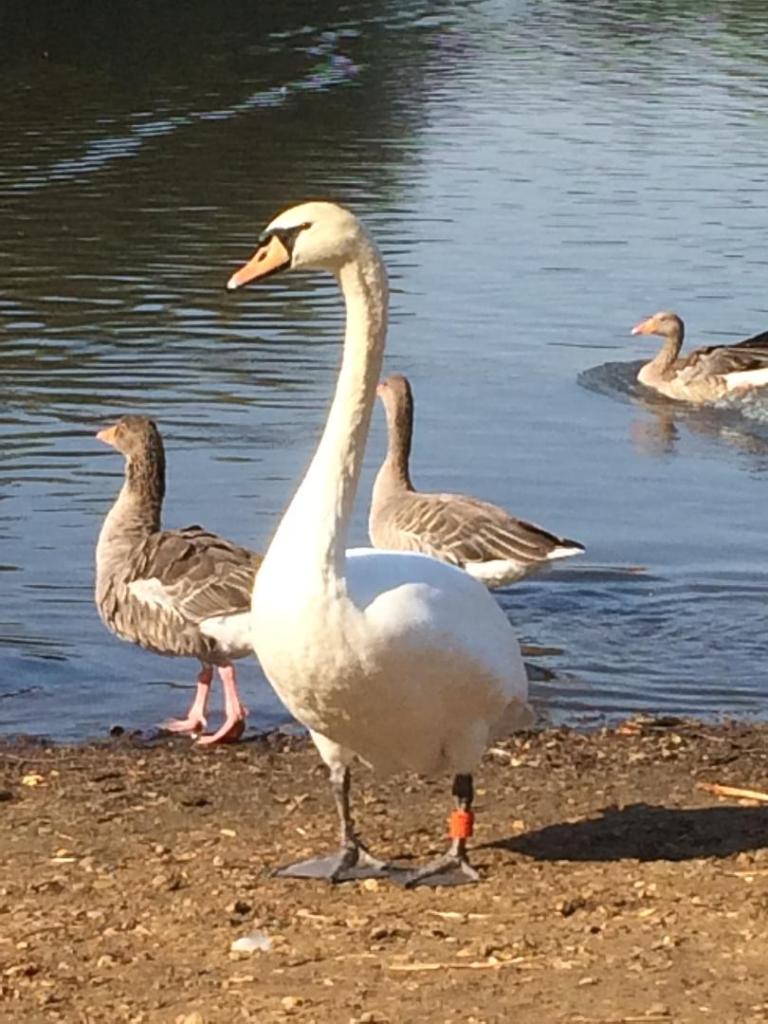
A greylag goose having a paddle.

Some years ago, I was asked to go and look at a horse that had stopped jumping and appeared to be in pain in his haunches and down his hind legs. I could tell immediately that he was in distress. He was twitching his tail, his eyes were wide and he was fidgety in his stall. His owner told me that the problems had started a couple of weeks previously. He’d been X-rayed and seen both the vet and physio but neither could find anything amiss. `Wear and tear’ was the diagnosis.

When working with animals of any type I begin by talking to them softly to reassure them. I offer them my hand to sniff so that they get used to my scent and then gently stroke their neck in order to win their trust. Only then do I begin treatment.

With this particular horse, I scanned his entire spine from neck to tail with my hands. I do this on humans too to pick up an areas of heat or cold as an indication of where the injury or condition might be centred. As soon as my hands passed over his withers – the part of a horse just below the neck and above the shoulders – he whinnied and shuddered, then calmed down again as I progressed down his spine. When I reached his haunches, he showed no reaction at all. This suggested to me that the injury was much higher up his spine than had been investigated by the vet.

I treated him around the area of the withers for the entire session and, by the end, he appeared much more at ease. When I left I told his owner to let me know if she thought he needed another treatment but a week later she phoned to say that he was now out in the field and jumping again with no sign of pain or distress. Result! Don’t ask me what was wrong with him – I have no idea. All I do is work with energies. What I do know is that animals can’t fake it. They’re not going to BS me by saying it’s worked if it hasn’t just to save my feelings, neither are they going to tell me it’s a load of rubbish when they’re clearly feeling much better.

I knew someone once who had a sign in her kitchen.

It read: the more people I know, the more I like my cat.

I certainly wouldn’t go that far: I am very much a people person. But, unlike actors who try to avoid working with children and animals, (who hasn’t seen the clip of Lulu the Elephant poo-ing her way around the Blue Peter studio?) as a Reiki practitioner, it’s the spontaneity, unpredictability and innocence that I love about working with animals – and children, of course.

Keep calm and cry if you want to….

I’ve had a strange old August. Not the one I had envisaged by a long chalk. I started it off with what I believe is called `face planting.’ Crashing headlong into the pavement: smashed glasses, black eyes, cracked teeth, fat lip and bruising like a bare-knuckle boxer. Just the sort of look I was hoping for this summer.

I kept calm, breathed into it and my daughter, who was with me at the time, couldn’t believe that I didn’t cry. I kept my mind firmly under control not allowing it to wander into an unknown catastrophe, healed myself with arnica, ice packs and Reiki and most of the swelling and bruising had gone within a week. Result!

A couple of days later I started with a temperature, shivers and chest infection. Humph! Just as I was getting well too! Despite my best self-healing efforts, I have had asthma since childhood and, sadly, had to resort to antibiotics and steroids. Reiki wasn’t cutting it this time and I’m not a complementary therapist who throws the baby out with the bathwater. We live longer in the C21st for a reason – as long as we use modern medicine wisely and in moderation.

I was still keeping calm as I rested my body watching way too much daytime TV than is good for me but my asthma deteriorated to the point that I had to be admitted to hospital for a few days. Still I kept a tight leash on my mind. It did it’s best to propel me into all manner of worst case scenarios where I was bed ridden in an iron-lung (if they still have such things) or even dead. I breathed into my nebuliser, knelt on my bed doing yoga and focused on every moment as it was happening: the feel of the vapour as I breathed it in, the sounds of the other patients, crying or shouting or snoring – or worse! – the blessing that is the NHS – please don’t let the idiots currently in power shut it down. I had, not quite a holiday, but a rest at least. Even the food was OK.

When I came home I was given pretty horrible medication that makes me feel as bad as the asthma – but it’s keeping me alive so what’s to complain about? My breathing was improving, my energy levels were increasing all was looking good. Until!

Part of my healing plan was to employ a cleaner to deep clean the house and root out all those corners of dust that have eluded me for longer than I care to admit. Half way through the cleaning she informed me that the tap in the kitchen was leaking. Actually, it wasn’t so much leaking as squirting water all over the worktop where she had broken it off! No problem, I thought, keeping calm and breathing into it: the agency will carry insurance. Ha! They didn’t! So I’m now involved in an unpleasant battle for compensation, with the company blaming the cleaner, the cleaner blaming me (?) and me just wanting someone to pay for my broken tap.

I was still keeping a handle on things when I took out the washing the other day. It was a glorious morning. I opened up my rotary drier – and hit myself square on the forehead. And that was it. The final straw that broke this camel’s back. Out it all poured: the bashed-up face, the chest infection, the asthma, the medication, the broken tap – the lot.

One small knock on the head; one giant floodgate of emotion.

And therein lies this particular lesson for me. Being in the moment is, in my opinion, absolutely the way to reach a higher level of consciousness, but part of being in the moment is being in touch with our feelings. Rather than simply breathing into them and trying to rationalise them, I might have been better if I’d expressed them earlier. Allowing my shock and pain at falling over to come out; my fear at not being able to breathe; my anger at the attitude of the cleaning company and my frustration at not being active for several weeks, might have averted my total meltdown as I stood in the garden with an armful of wet washing.

Emotions, are the key to what’s going on in our bodies. They are real and not to be ignored. And, like most things in life, they are best done in moderation: little and often, thus avoiding the pressure-cooker of built-up, unexpressed feelings. Crying is not a weakness: it’s an outlet: a safety valve. Expressing what we don’t like allows us more emotional space for what we do like.

So I’m suggesting that it’s fine to keep calm – as long as that’s genuine. But if it’s covering what’s really going on, then go ahead and cry. Get it all out. You’ll be amazed at authentic calmness that lies beneath. It’s your party- cry if you want to! I intend to.