Whitewashes, blood money and graven images.

Recently I’ve hear a lot of people being very critical about the removal of statues from our community. Not just any statues but those of people involved in the slave trade or Nazism or the oppression of people who live/d in countries systematically pillaged by the British Empire. I’ve heard comments such as, `Yes, they might have made their money through slavery but look how much good they did for their community.’ Or, `That was all in the past – we can’t do anything about that now and we should just move forwards.’ Or, `I object to the amount of public money that’s going to be spent on removing statues that could have been put to better use.’ Or, `You can’t just tear down the whole of a city that someone built just because you don’t like something they did.’

These have not been the words of far right, hard-line, white-supremacists: these are the words of intelligent, highly-educated, progressive, liberal-minded, white people. The sort of people who pride themselves on being anti-racist. The sort of people who proudly announce that they’ve got many friends who are black or Asian (just to prove that they’re not racist.) The sort of people who applaud Black History Month. (Why is only one month out of twelve dedicated to Black History? Why isn’t black history taught as part of the History curriculum?) But I digress.

The point I want to make is that a statue is a means of honouring someone: applauding them for their contributions to society. Edward Colson was a philanthropist in Bristol. He put money into schools and hospitals – great! But that money was blood money. It came from trafficking 84,000 men, women and children to the Caribbean and America. Many died en route through the inhumane conditions on his slave ships. The rest were enslaved and the majority were then systematically tortured, raped, mutilated and murdered. Is this really the type of person we want to honour? If you really can’t see why his statue needed to have been taken down decades ago, ask yourself, as an open-minded, liberal white person, would you want a statue of Fred and Rosemary West at the bottom of your road? Or Peter Sutcliffe? Because, believe me, what they did to their victims was peanuts compared to what Colson was a party to.

Now let’s think about Robert Baden-Powell: the founding father of that wonderful institution that, today, teaches children and teenagers to be independent, resourceful individuals, skilled in all sorts of outdoor pursuits. The scouting movement has evolved almost unrecognisably since it’s inception in 1907 – thank goodness. Because Baden-Powell was a Nazi sympathiser whose scouting movement formed the blueprint for the Hitler Youth Programme in 1920s and 30s. Again, would we want to honour that other infamous fascist, Oswald Mosely? I hope and believe that most people can understand why it’s inappropriate and offensive to do so. Bear Grylls, the current Chief Scout is quoted as saying, `We most certainly do not celebrate Baden-Powell for his failings… we know where we came from but we are not going back.’ I don’t think anyone is suggesting going back – without a time machine that’s not even possible – but I’m suggesting that we certainly need to look back at our history (which as been whitewashed to be more palatable for our fragile white egos). Certainly it’s OK to honour the things we’re proud of, but perhaps those more sinister aspects of our history should be displayed in context in museums – and I include Baden-Powell in that.

And, as for Winnie? What can I say? Yes, Churchill was a great orator. Yes, he inspired the allies to defeat Nazi Germany and that was exactly what was needed during the Second World War. But he was also a white supremacist and a mysogynist who believed in eugenics, the British Empire and almost single-handedly brought about Partition in India in 1947. He stepped up to lead his country in the face of invasion and I, for one, am grateful. But the rest of his career, both political and military, was dubious and certainly not one to be honoured.

I have no doubt that people will argue that no one is flawless and I agree: it’s what makes us human. As an author I teach creative writing and I stress that characters need flaws as well as attributes in order to make them whole and rounded. BUT…. if a main character’s flaws outweigh their attributes we are less able to identify them as protagonist or antagonist; hero or villain; goody or baddie. And the same goes for real human beings. It is neither honourable nor advisable to only recognise one facet of a person. You cannot honour the philanthropist without also acknowledging the slave trader; nor the scout master without his fascist leanings, or the orator without his Imperialism.

So why have graven images at all? Why can’t we remember events without the Cult of Personality that detracts from the real history and focuses on individuals? Why not have contextualised resources that demonstrate the full story rather than glorifying one side or one person? Why can’t we begin now to tell the truth, the whole truth and nothing but the truth? History isn’t monochrome. And it certainly isn’t the way it’s been taught in this country for the last couple of hundred years.

Thanks to the BLM protests and social media, every single day I am learning something new about my country and my culture. Without this knowledge I would have continued through my comfortable, white-privileged life, being blinkered to the reality of what has been done in my name.

It’s time we all stepped outside our comfort zones. Because comfort zones are rarely comfortable and, without stepping outside, there is no understanding of the wider world, no learning about things other than ourselves and absolutely no growth.

And without growth there is only atrophy.
White Privilege/Black Lives

Some people might have seen me write about white privilege on FaceBook yesterday and I make no apologies for repeating, and expanding, my message on my blog today. I also make no apologies for having this post as plain text without any of my usual nature photographs. This message is too important for distractions.

All white people – of whatever socio-economic group – have white privilege – and most simply do not get it. I am a white person and, despite having many friends of Black, Asian and minority ethnicities, it took me years to fully understand what white privilege was and why Black Lives Matter.

Until all white people can all hold up our hands and admit that we are treated differently simply because of the paleness of our skin we will never alter the fundamental flaws in our institutionalised racist society. This is everyone’s responsibility. And before anyone says it doesn’t happen here – my husband, who is black, has been refused service in pubs all over the world – including in east London, one of the most multicultural cities in the world! Yet, when I go to the bar, I get served immediately. When he waits at a cash point, people move away rather than withdraw cash in front of him; when he chased a thief and called the police, the white police officer accused him of being an accomplice; when we had an allotment, people would ` joke’ that he was growing cannabis; when he left an all white party to get something out of the car, he was asked if he was going out `for a sneaky spliff’. He has never smoked, drunk alcohol or done drugs in his life but the black stereotype persists. On a plane full of 300+ white people, guess who was the only one to be pulled over by Customs? I could go on but you get the drift.

Racism is everywhere. People cross the road when my husband is coming towards them and, when we started going out, my neighbours would speak to me – except when I was with him, then they would cross over. (Some still do!) This white superiority is a global pandemic. As white people we have to look deep into our souls and address the subtle traits that we might try to deny to ourselves but are screaming out to people of colour. The preconceived judgements, the expression on our face, the tone in our voice. Racism seeps out of every pore. It is apparent in people’s faces.

It’s not good enough to say, `Well, it’s people of that generation…’ or `It’s how I was brought up…’, or, probably, the most insidious of all, `They can’t take a joke.’

I’ll address the last point first – a joke is supposed to be funny; if it offends anyone, it’s bullying. And that goes for homophobic jokes, sexist jokes, jokes about people’s appearance – whether it’s skin colour, ears, hair, mouth, teeth, nose or any other feature – and those about people with disabilities. It is offensive, ignorant and downright cruel! One snide joke can bury itself in a person’s psyche and affect them for decades. It is thinly disguised psychological and emotional abuse wrapped up as `a bit of fun.’ Except it isn’t!

And, secondly, using your upbringing is a pathetic, lazy and unacceptable excuse for being unwilling to change. I was brought up in the 60s and my father was a racist: he supported Enoch Powell, grumbled that the British athletic team wasn’t British any more because the athletes were mainly black, told me if I ever had a black boyfriend neither he nor I would be welcome in his house. (Guess what Dad, I married a black man!) Yet, even as a 13 year old, I challenged him and his views. He worked in a factory with only 1 black person – a bus driver whom he always referred to as Tom. When I went into work with him one day I said, `Good morning, Tom.’ My father was furious with me because, of course, Tom wasn’t his name: it was a reference to Uncle Tom. No one actually knew Tom’s real name. How appalling is that? And it smacks of the plantations when enslaved black people were renamed by their white owners. As a teenager I couldn’t understand racism and I still can’t.

All white people: British, American, European, Antipodean – and I include myself – need to educate ourselves as to why black lives matter. Yes, all lives matter, but all too often, in the eyes of the authorities and society at large, black lives don’t seem to matter as much as white lives. And they do! BLACK LIVES MATTER!

I will continue to challenge all forms of prejudice until I die. I’m not going to apologise for going on too long about this because it’s impossible to go on TOO long. The only thing going on too long is the length of time that society has perpetuated this.

If anyone’s finding this uncomfortable to read – that’s a good sign: it means you recognise something in yourself. And recognising something is the first step to changing it. Let’s hope we’re all willing to!

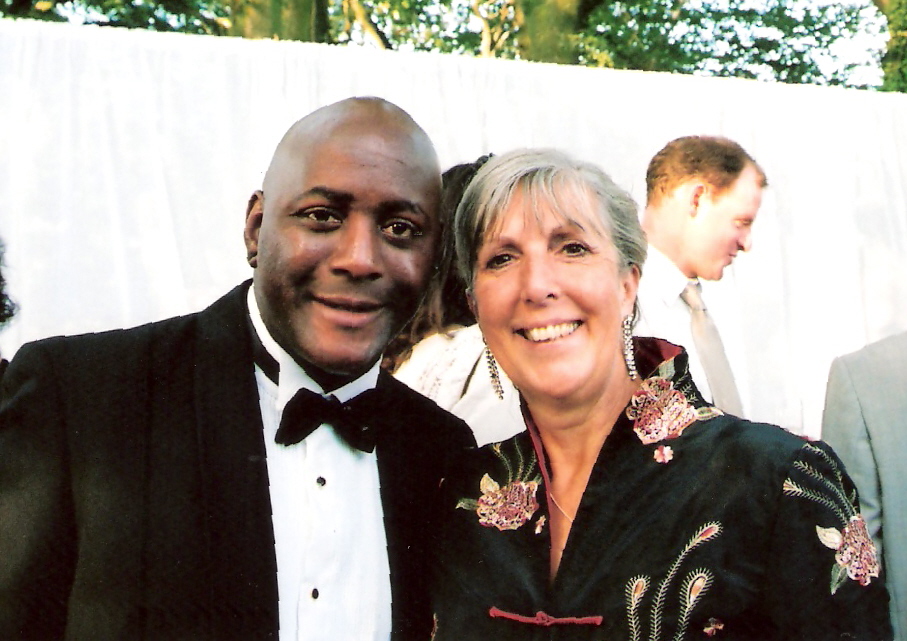
My husband and me.

Love in the time of Covid-19

According to the quote by John Lennon, there are only two motivating forces: love and fear. In these strange and uncertain times, it’s easy to get into a state of fear; that fight or flight reaction that prompts some people to run out to the supermarket and wrestle pensioners to the ground for the last roll of loo paper. It’s fear that creates panic and panic creates irrational behaviour.

We are currently being bombarded with news reports, bulletins, press conferences and expert advice – some of which is contradictory: be prepared to go into lockdown for up to 6 months/we’ll be on top of this in 12 weeks. Stay at home/ go out in the fresh air. Takeaways will stay open/takeaways are going to close because people are standing too close in the queue. Wear face masks/ face masks are useless. It’s a confusing, and potentially worrying time for everyone. It’s easy to slip into a state of fear, panic and anxiety.

But these unhelpful emotions are usually the result of allowing our minds to wander off into all manner of unknown scenarios. We hear that the pandemic is likely to last months so our minds get busy projecting a dystopian future with no food in the cupboard or loo roll in the bathroom. As a result we fly off to Tesco – or Sainsbury’s, or Asad (fill in as applicable) – and buy up enough stocks to last us for the entirety. Which in itself is an unknown and unspecified length of time. The effect is depleted stocks, queues round the block, essential workers unable to buy anything and fights breaking out in the aisles. A pretty shameful state of affairs. And all because we allowed our minds to run riot.

And, it’s counter productive anyway because, when we’re stressed, the immune system’s ability to fight off antigens is depleted: we are more susceptible to infections. The stress hormones, cortisol and adrenaline – although useful for getting us out of immediate danger – can, over time, suppress the effectiveness of the immune system leaving us open to the very viruses we fear. By panicking, we are creating the ideal environment for all diseases, not just coronavirus, to flourish.

If we choose the other motivating force: love, how much different might the world be? Love is based on truth; truth is based on reality and reality is what is happening right now. And what’s happening NOW is the only thing we actually know to be a verifiable fact. Anything that is a future event is an unknown. And most of what goes round our minds when we’re panicking is worst case scenarios. i.e. NOT true at this moment.

What we do know to be true is that there is a new virus that is spreading round the world and there is, as yet, no cure or vaccine. And that is the simple truth. We don’t know how many are going to die. At the moment it’s killing fewer than seasonal flu, starvation or cancer. That might change but we simply don’t know. That’s not reality right now. We also know that hand washing and keeping our distanced can stop the spread of the virus – which also goes for colds and seasonal flu by the way. We don’t know the effectiveness of face masks; it’s estimated that they work for about 20 minutes or until they become soggy with our breath. Again: an unknown.

All we can do is deal with what we know to be true and keep ourselves informed of any new developments that might change our reality. And we can make sure that whatever we do is motivated by love, rather than fear: love for ourselves, our families, our communities, our essential workers and the whole planet. Praise people rather than criticising them; send messages of love and hope on social media; if you can go out, smile at one another (from a 2m distance!); send poetry, photographs, pictures, music via the Internet. Keep people’s spirits lifted; suppress the fear not the immune system.

My husband just came back from Tesco – no queues today but no loo rolls or Paracetamol either. But they were giving out free bunches of flowers to every customer. What a lovely gesture to raise people’s spirits.

Free flowers from Tesco this morning.

So, in the words of another great and wise teacher, Yoda (aka George Lucas): “Fear is the path to the dark side. Fear leads to anger. Anger leads to hate. Hate leads to suffering.”

Let’s all stay on the `light side’, the side of love and compassion and healing. Let’s keep our minds in the moment. And let’s support ourselves, our families, our communities and our planet to live through this and, hopefully, grow from it.

Keep safe!

Drifting into unconsciousness

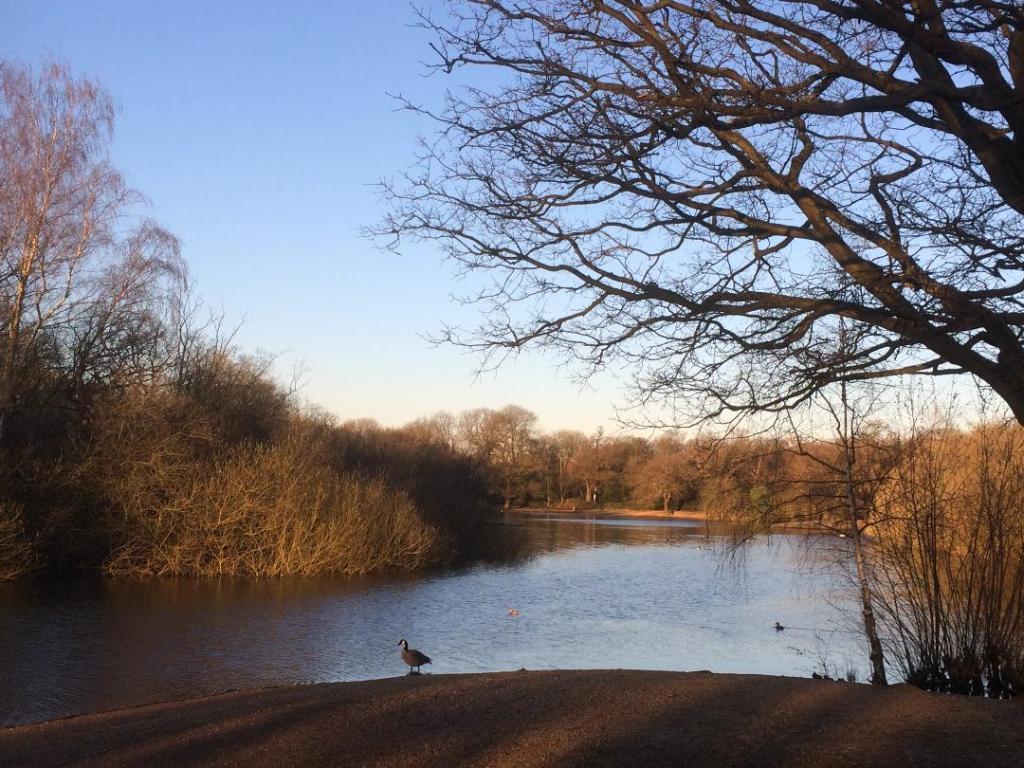
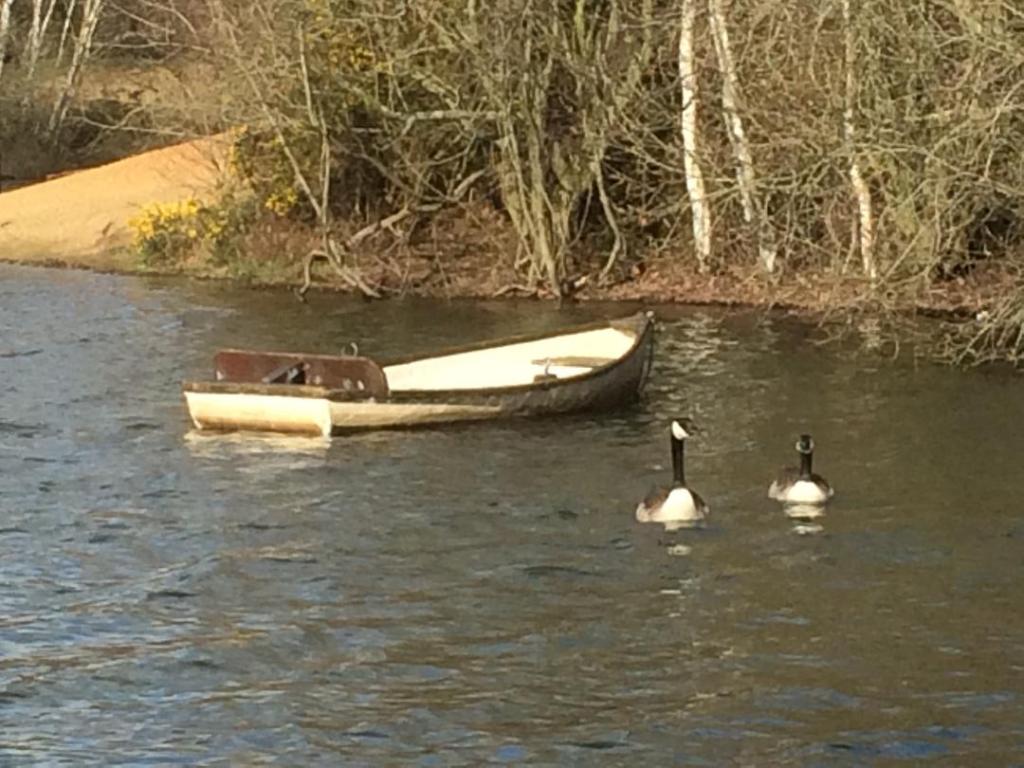
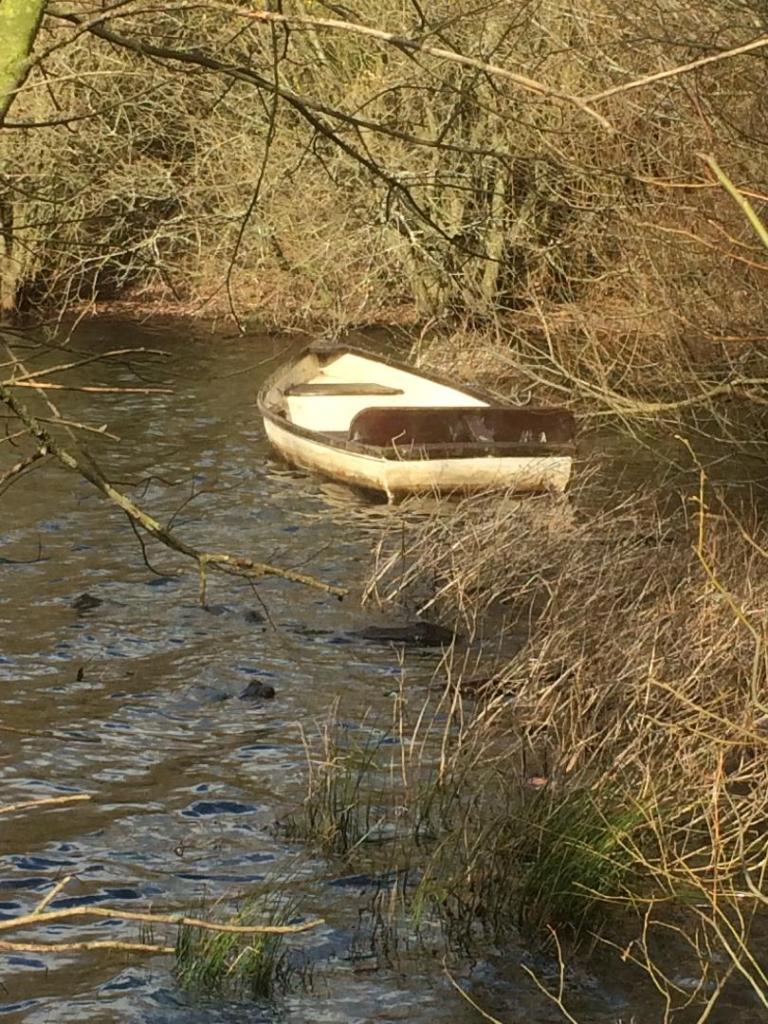
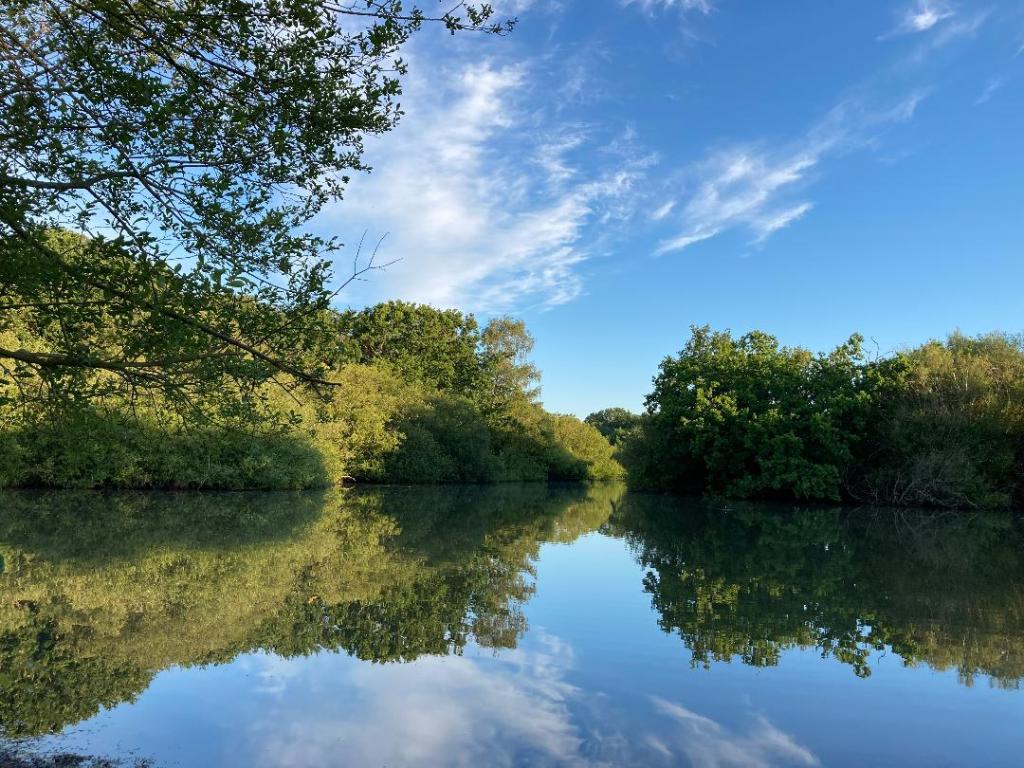
As I sat by the lake yesterday morning, I watched a rowing boat come loose from its moorings and drift aimlessly across the water.


It moved extremely quickly from one side of the lake to the other, allowing the breeze to spin it, sometimes stern first, sometimes helm first. Waterfowl landed on it as it floated helplessly on the water before becoming entangled in the bushes in a part of the lake that is inaccessible other than by another boat.

And I was reminded of life. I thought how easy it was for anything, or anyone, to come loose from their moorings, lose sight of their destination and drift from day to day: year to year, without a proper plan.

I doubt anyone would decide to travel the world without a map or an itinerary of which countries they wanted to visit and in what order. And, if they did, I think their friends would be justified in thinking them foolhardy.

I also think it highly likely that they wouldn’t make it very far before they ran into trouble or out of money. Planning is everything! Yet how many of us actually have a life plan? An ultimate goal we want to achieve and steps we need to attain to get there?

That’s not to say that plans can’t change. They can – and probably need to – change as we progress through our lives. The person we loved as a naive teenager might not still be a match as we reach middle age; the job that satisfied us in our twenties, might have become mundane and cease to inspire us by the time we’re in our forties. Conscious change is good – and often necessary – for survival and growth.

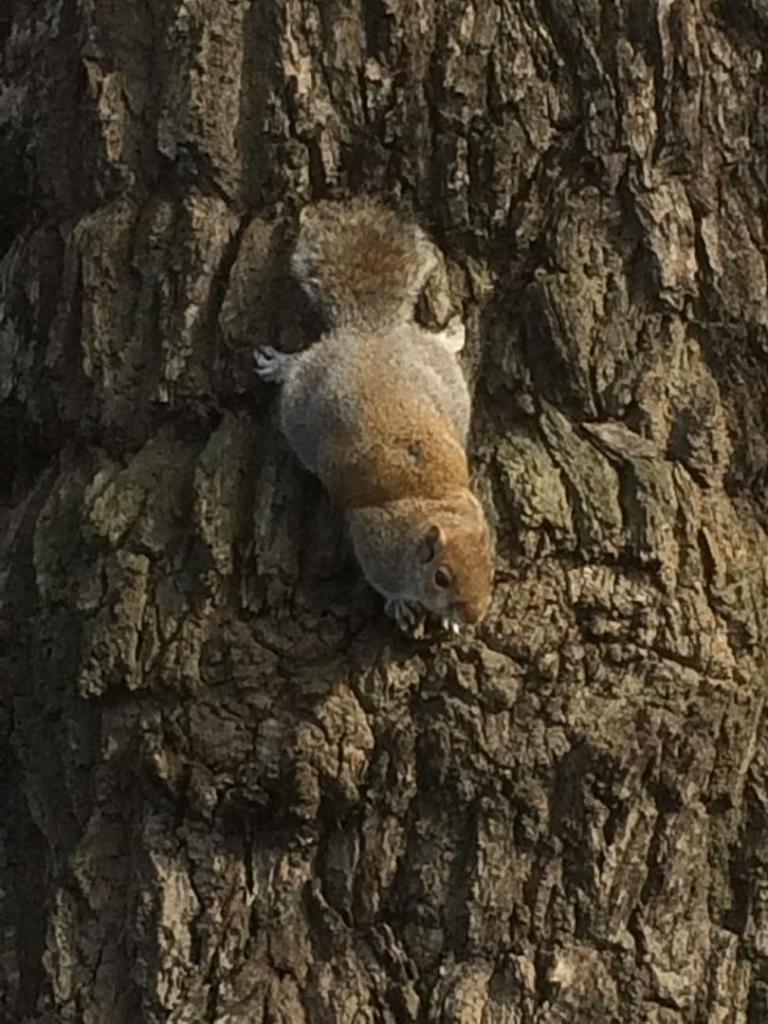
A squirrel planning its escape route.

Unconscious change however, is often driven by fear, or apathy, and can have dire consequences. The change of job that comes with redundancy and a frantic scrabble for any employment to pay the bills; the rebound marriage so that they won’t become a lonely old wo/man surrounded by cats and die alone, eaten by the aforementioned felines, the moving house when a loved one has died to get away from the memories. That’s not to say that major life events such as death or being made redundant, or being jilted, don’t have a huge impact on us and our circumstances. They do.

Many years ago, I knew a couple who’d lived in their magnificent Edwardian, six-bedroomed house for over 60 years, ever since their marriage. When the husband died in his late 80s, the widow immediately sold up and moved to a two-bedroomed flat nearby. And she hated it! For the rest of her life, which was a surprisingly long time, she bitterly regretted her decision. It had been based on fear of `rattling around in a sprawling house full of memories.’ How much happier might her last decade have been had she taken the time to be with her loss and look at her options: buy a smaller house perhaps, or move her son and grandchildren in with her, or even learn to live in the big house on her own or with a companion?

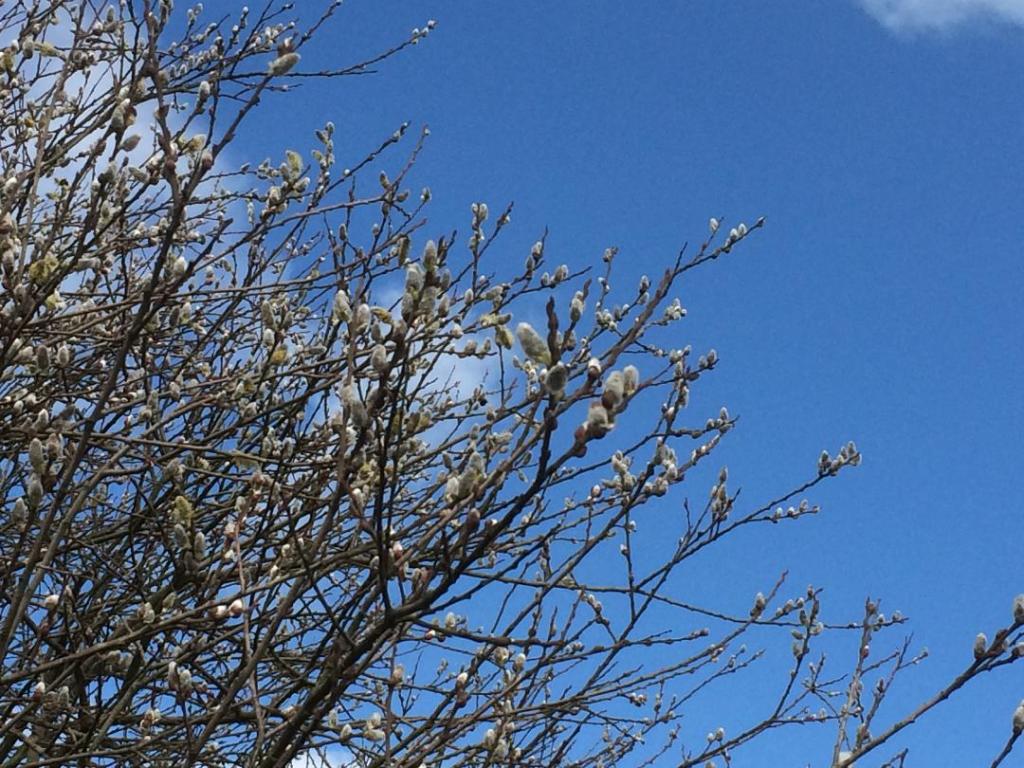
Pussy willow this morning. Spring is sprung.

Alternatively, some years ago, my husband was made redundant. He was offered several different jobs within the same organisation but none of them was what he really wanted to do. It would have been easy to drift into one of them but, instead, he took six months to look around and find something that really inspired him. Money was tight for that time but it was worth it for him to have job satisfaction rather than coming home miserable and frustrated every evening.

It’s never too early to start planning our life, neither is it ever too late. Even if we’re given a terminal diagnosis, we can plan how we want our end of life to be: a hospice or at home; surrounded by our entire family or just that one special person; music playing or watching a favourite film; flowers around us or photographs? Of course, the Universe has a habit of thwarting our plans – if you want to make God laugh, tell her your plans – but even then, we can choose how we want to be with it. Do we want to rail against the world, or accept what’s happened with serenity?

It’s our life and we can choose to manage it consciously or drift aimlessly through, and out of, it.

I encourage you to choose your path consciously and wisely. And make sure you steer your own boat – or risk ending up tangled in the bushes!

Abundance!

An abundance of blustery weather recently!

Ask most people about abundance and they’ll talk about monetary or material wealth – and few of us believe that we have enough of that in these days of rising inflation. There’s usually one more item of clothing we’d like to buy; or the prestige brand of coffee rather than the `own’ brand; the theatre ticket in the front row rather than up in the gods; the new car; the holiday; the good quality, brand new baby goods rather than second hand ….. and the list goes on. If any one of us were to make a list of the things we want (rather than need) we’d probably fill W.H Smith’s entire stock of A4 notepads. For me, a VW campervan and a swimming pool would be pretty high up on the list. I don’t need either of them, but they’re part of my dream life.

Dreams, however are not reality. Something to aspire to, perhaps, but they are not tangible; they do not exist in the here and now. And all any of us can do is to live in reality – live in the NOW. (For those of you who follow my blog posts, you’ll notice that there are recurring themes and I make no apologies for this. These are things I feel passionately about: living in the moment, taking responsibility for ourselves and our behaviour, gratitude, paying it forwards etc. )

So what do the title of this post, Abundance, and living in the now, have to do with one another? I suggest that abundance comes in many forms, not just material wealth. Abundance means a large quantity of anything: love, good health, friends, nature, birdsong, flowers, work, food, energy – absolutely anything at all. And, if we look at what we have in our current lives – in the here and now – we will often find that we have an abundance of a lot of things.

I am currently undertaing the Deepak Chopra 21 day Abundance Challenge: a 3 week course of tasks and meditations to increase abundance in my life. I decided to do it because, although I have an abundance of many, many things such as love, friendship, nature and food, I have had a scarcity of writing work for several years – and I want to change that. I am a writer to the very core of my soul – nothing gives me more fulfilment and satisfaction but, since my husband’s diagnosis of cancer almost 10 years ago, my writing work has been very thin on the ground. And (unlike having my own private swimming pool!) this is something I can do something about – right now. I’m writing this blog, which gets me in a creative frame of mind; I’ve set aside 3 days a week for writing; I’m working on 2 separate writing projects (no spoiler alerts here!!!) and I’m noticing how full my life is on almost every other level – and I’m paying it forwards. Because I believe that paying forwards rather than paying back increases abundance in all areas.

The three bunches of flowers given to me.

Last week I was given three bunches of flowers by someone I’d never even met. She gave them to my husband to give to me and they were, and still are, beautiful. So today I decided to pay it forward by buying 5 bunches of daffodils and handing them out to random strangers in my local High Street. And I could not believe how difficult that was! The first three were accepted fairly quickly and gratefully but, oh my days – the last two! I was amazed at how many people either said an outright no! Or simply walked past without even acknowledging me. Anyone would have thought I was handing out Coronavirus. I felt sad for those people who were suspicious of a free bunch of daffs. I hope that whatever created their mistrust, is quickly overcome so that they can open up to other opportunities – and free flowers – in the future.

I’ve heard people say: what you give out, you get back. But I’m not sure I subscribe to that philosophy. There are people who give out love energy all the time, yet still get pooped on from a very great height. I prefer to say: what you receive: give out three fold. That’s not saying that, should you get mugged, you go out and mug three other people! That’s not what this is about at all. This is about kindness; spreading love energy; paying it forwards; creating abundance worldwide. It’s the only way to counter the negative, hostile energies that seems to pervade parliament, the White House and other centres of world politics at the moment.

Most of us, especially if you’re reading this on a PC or smartphone, are materially rich beyond the wildest dreams of many people both in Britain and developing countries. So I highly recommend noticing, and being grateful for, the abundance we already have in our lives: the roof over our head, the food on our table, the birdsong in the morning, the flowers blooming after the winter. And, if there are areas of scarcity in your life, look at how you can create abundance, either from that source or another. Abundance, be it material, energy, love, health or anything else, seldom appears miraculously out of nowhere: it requires dedication and work to create it – but, most importantly, an openness and willingness to accept what’s offered rather than what we specifically wanted.

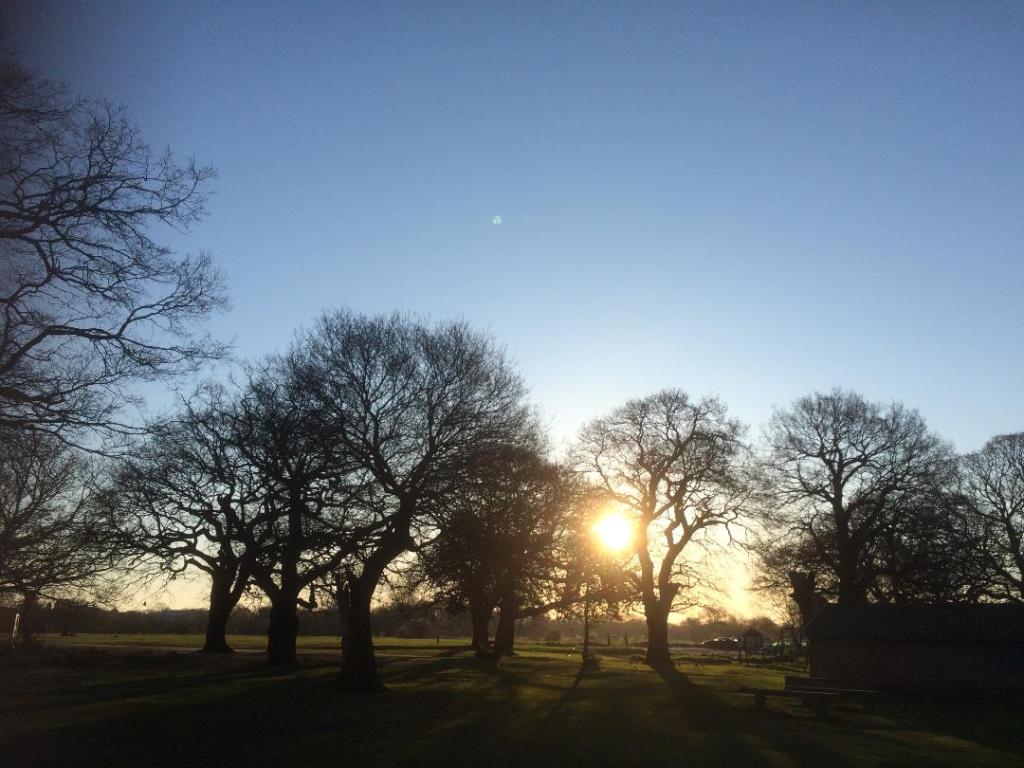
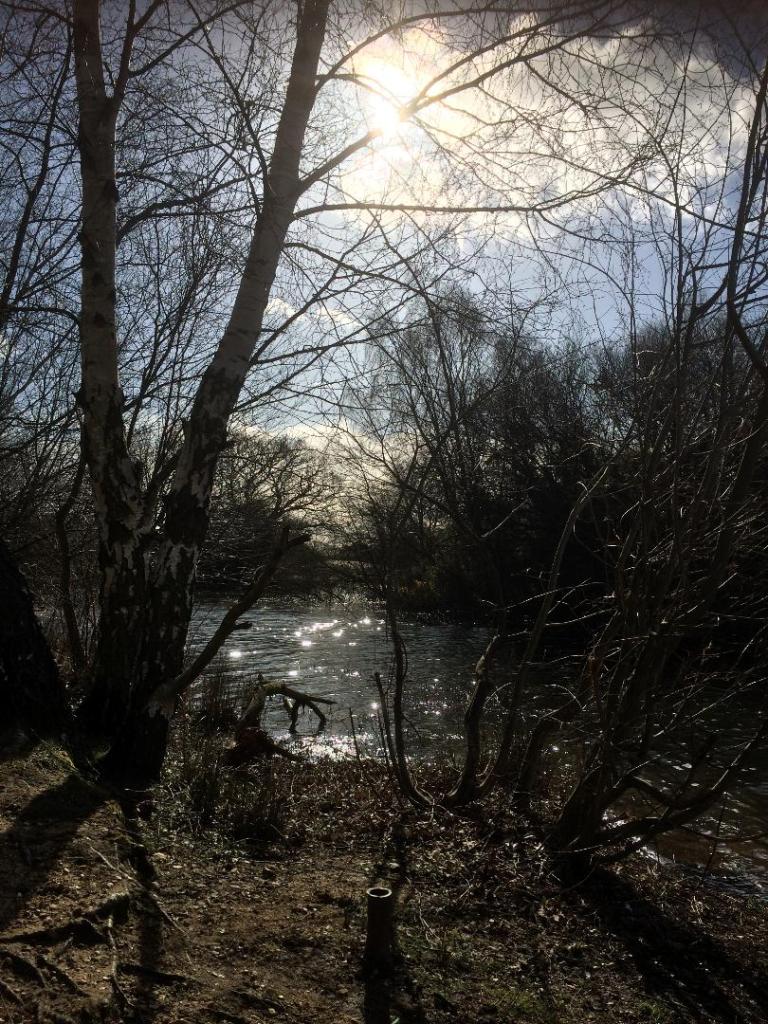
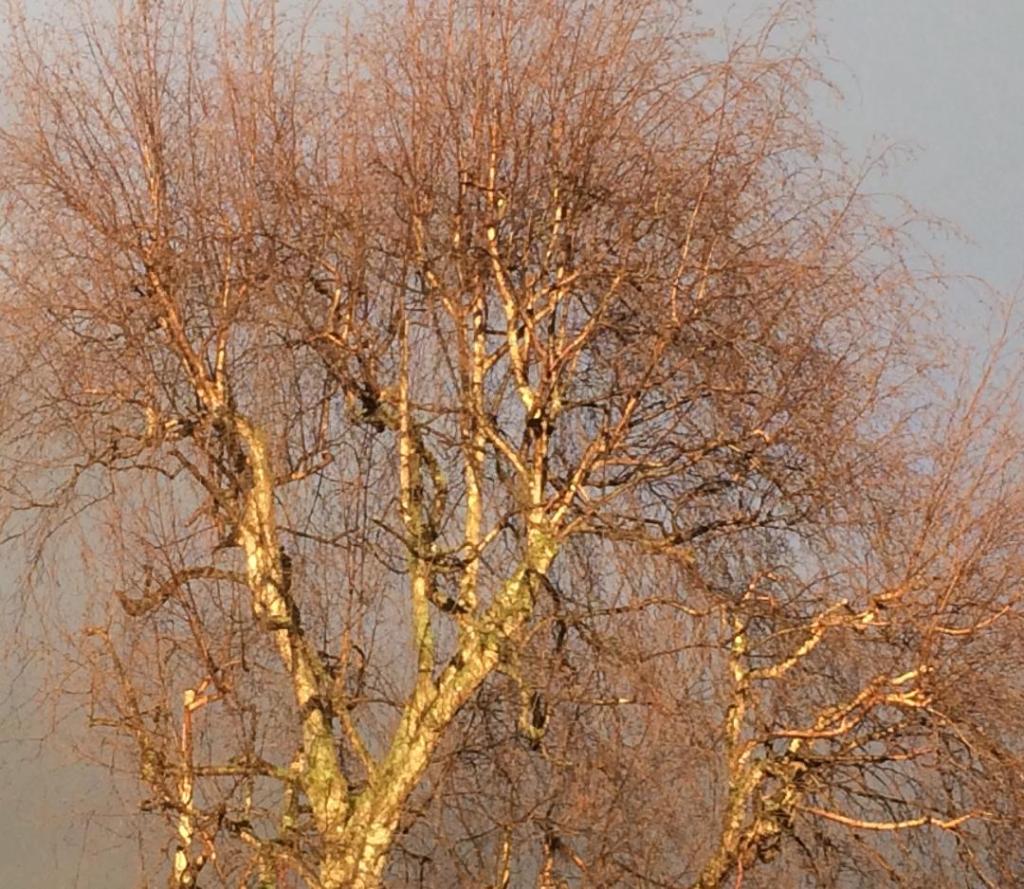
I’ll leave you with a photograph of a brief moment of sunshine between the rain storms last week. I loved the light on the branches.

Have a blessed and abundant day – in all its forms!