Turnips, mischief and bonfires.

Ah, the good old days! When I was growing up in an East Yorkshire village in the 1960s, we didn’t celebrate Hallowe’en. Nor did we have pumpkin lanterns. Our lanterns were made out of either turnips or swedes – both considerably harder to carve than pumpkins – and, instead of October 31st we had Mischief Night – the night before Bonfire Night: November 4th, .

And it really was about mischief! The people who complain about trick or treating nowadays, have no idea of the terror that Mischief Night could inflict on the elderly and those living alone. Children didn’t politely knock on doors wearing fancy dress and asking for sweets. It was rather more sinister with (mainly teenagers) playing knock-down-ginger: a game where children ring the door bell then run away before the householder can answer. In our area, it became even more upsetting for the victim as the mischief makers often tied the front and back door of a house together with string or tied a dustbin lid to the front door before running off. My brother and I were never allowed to participate as it was deemed an excuse for mindless vandalism by our parents. And, as I grow older, I think: rightly so! There’s a lawless element about Mischief Night.
Hallowe’en, however, has much more spiritual roots. Despite all the claims that it’s a night for devil-worshippers to do Satan’s work, Hallowe’en has it’s origins in Samhain, the pagan festival on the last day of October to celebrate the end of the third and final harvest: that of nuts and berries.

Later on, when Pope Gregory III decided to change the date of All Saints’ Day (also known as All Hallows’ Day) from May 13th to November 1st to coincide with the dedication day of All Saints’ Chapel in Rome, the evening before became known as All Hallows’ Eve – Hallowe’en. In Ireland, a Hallowe’en tradition developed for people to light bonfires and wear scary clothes to frighten away `evil spirits’. And, after the potato famine and the clearances by English landowners, many Irish families emigrated to America taking this tradition with them.
Trick or treating, the practise of knocking on doors and asking for sweets, also has its roots in religion and is not, as is popularly believed, an American custom adopted by the Brits. Throughout Europe, poor children would knock on doors on All Hallows’ Eve asking for food and money in exchange for saying prayers for the souls of the dead. This became particularly prevalent during the plagues that swept across Europe between the C14th – C17th.

So the Hallowe’en that we know today is a combination of Samhain and All Saint’s Eve. It’s about the ancient and the new; about giving and honouring. At Samhain and Harvest Festivals we give thanks for the food that’s been gathered in to keep us going through the dark days and nights of winter: likewise at both Samhain and All Saints’ we honour the souls and memories of our departed family and friends. And both festivals include donating to the poor, be that children asking for sweets or those on low incomes in need of food.

Most autumn festivals also include bonfires to bring light and warmth into the dark nights. But, while I love a good fire, I can never subscribe to the practise of burning an effigy, be it Guy Fawkes or anyone else. To me, it’s just not good karma.

So whatever you celebrate at this time of year, be safe. Remember the origins of the festivals are not in playing tricks but in gifts and gratitude. Have a splendid Samhain, an awesome All Hallows’ Eve, a delightful Diwali and a brilliant bonfire night!
Horses for courses

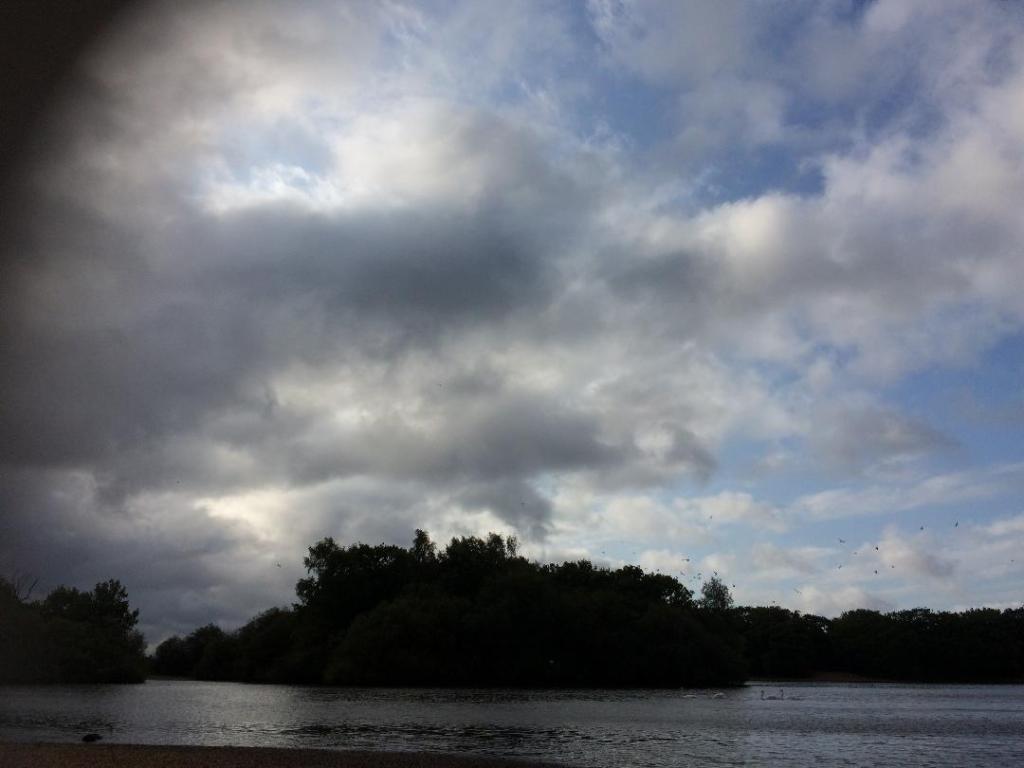
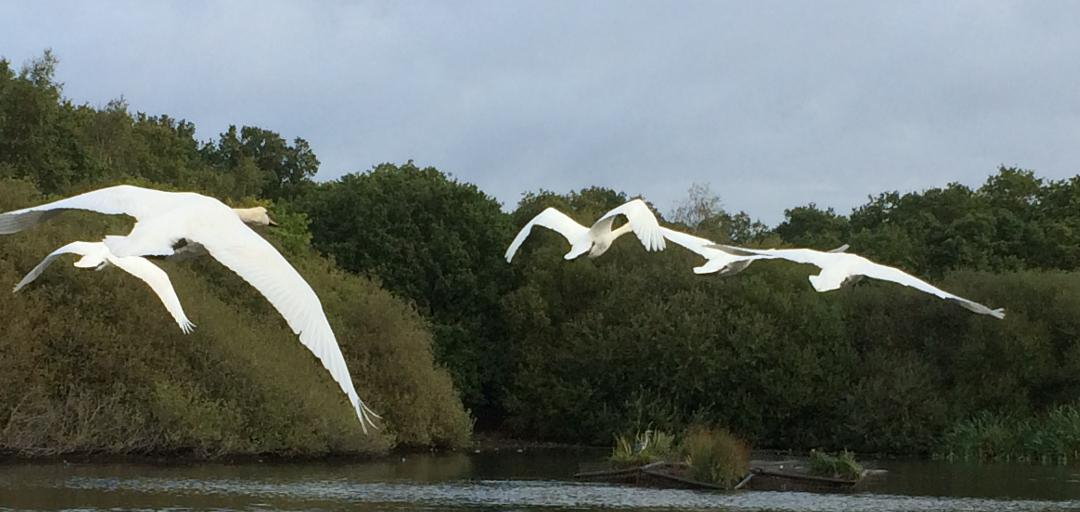
Swans on the wing.

I was recently introduced to another Reiki Master. She and I both thought we recognised each other but, despite interrogation worthy of the Spanish Inquisition, there didn’t seem to be any common denominator. Perhaps it was just one of those `meeting of minds’ things: recognising each other on a soul level. At one point, over coffee, she asked me which I thought was more effective: Reiki or ThetaHealing.

The simple answer is: it depends on the client and their condition. If someone comes to me with a sports injury or an acute problem such as aggravated arthritis or cancer even, I wouldn’t hesitate to give them Reiki. But if someone comes with a chronic condition such as persistent back pain, difficulty in conceiving, depression, addiction or any other long term health issue, I would probably be more likely to suggest ThetaHealing to try and root out the underlying reason for their condition. Whether or not we like it, our minds and bodies are inextricably linked and our beliefs, thoughts and fears are often reflected in our physical well being. One of the greatest exponents of this theory was the late Louise Hay and I can highly recommend her books if you’re interested in learning more about this.

You Can Heal Your Life by Louise L. Hay - (9781870845014)

One thing I do know is, if I’m asked to work with an animal, Reiki is the way to go. I really enjoy working with animals because they don’t come with any preconceived ideas or expectations. Human clients often come with a belief system already in place. Either: this is a load of mumbo-jumbo or this is the cure-all for every ailment under the sun. All animals have to do is lay, sit or stand there while I channel the Reiki energy. And the results are often astounding.

A greylag goose having a paddle.

Some years ago, I was asked to go and look at a horse that had stopped jumping and appeared to be in pain in his haunches and down his hind legs. I could tell immediately that he was in distress. He was twitching his tail, his eyes were wide and he was fidgety in his stall. His owner told me that the problems had started a couple of weeks previously. He’d been X-rayed and seen both the vet and physio but neither could find anything amiss. `Wear and tear’ was the diagnosis.

When working with animals of any type I begin by talking to them softly to reassure them. I offer them my hand to sniff so that they get used to my scent and then gently stroke their neck in order to win their trust. Only then do I begin treatment.

With this particular horse, I scanned his entire spine from neck to tail with my hands. I do this on humans too to pick up an areas of heat or cold as an indication of where the injury or condition might be centred. As soon as my hands passed over his withers – the part of a horse just below the neck and above the shoulders – he whinnied and shuddered, then calmed down again as I progressed down his spine. When I reached his haunches, he showed no reaction at all. This suggested to me that the injury was much higher up his spine than had been investigated by the vet.

I treated him around the area of the withers for the entire session and, by the end, he appeared much more at ease. When I left I told his owner to let me know if she thought he needed another treatment but a week later she phoned to say that he was now out in the field and jumping again with no sign of pain or distress. Result! Don’t ask me what was wrong with him – I have no idea. All I do is work with energies. What I do know is that animals can’t fake it. They’re not going to BS me by saying it’s worked if it hasn’t just to save my feelings, neither are they going to tell me it’s a load of rubbish when they’re clearly feeling much better.

I knew someone once who had a sign in her kitchen.

It read: the more people I know, the more I like my cat.

I certainly wouldn’t go that far: I am very much a people person. But, unlike actors who try to avoid working with children and animals, (who hasn’t seen the clip of Lulu the Elephant poo-ing her way around the Blue Peter studio?) as a Reiki practitioner, it’s the spontaneity, unpredictability and innocence that I love about working with animals – and children, of course.